
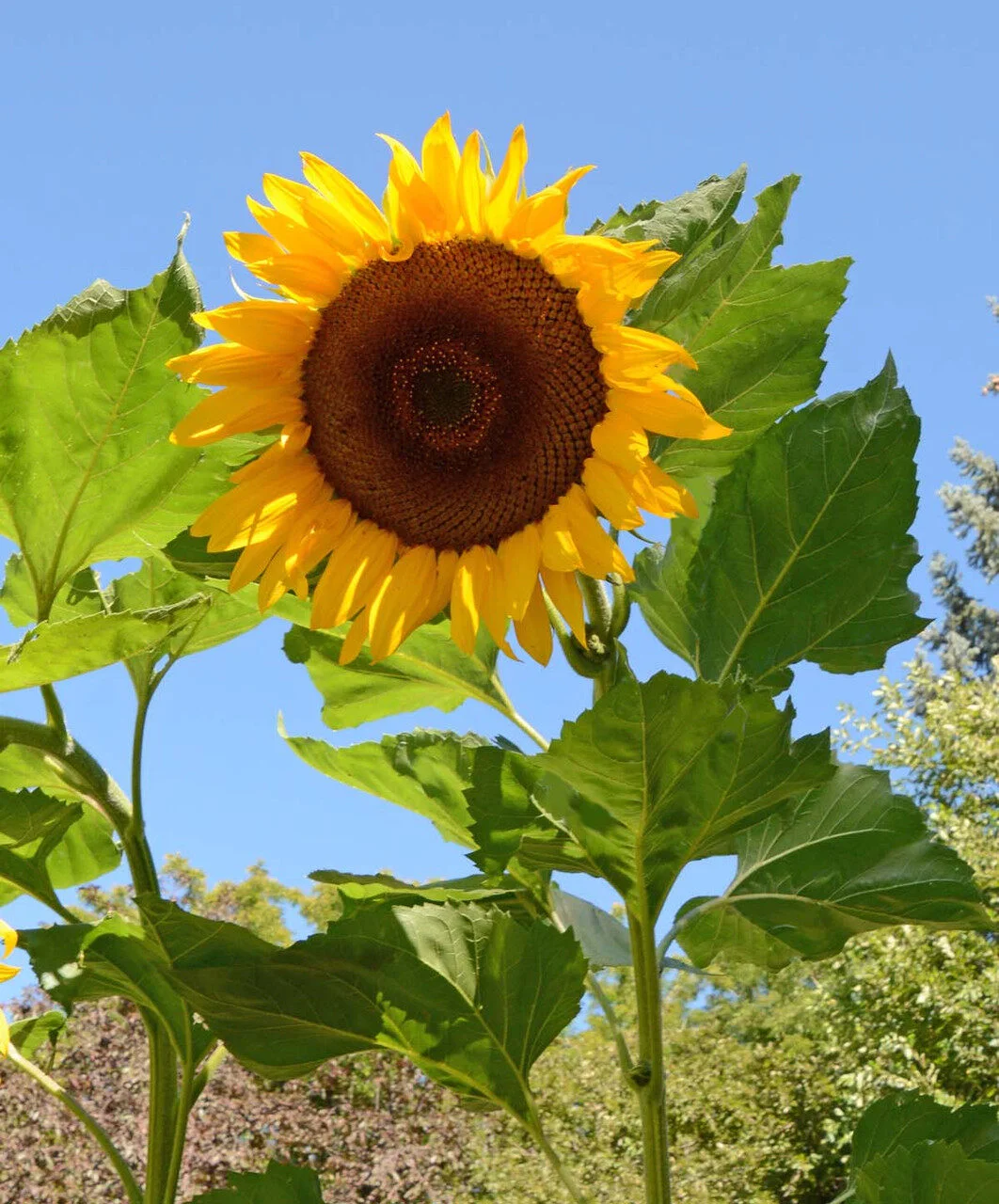
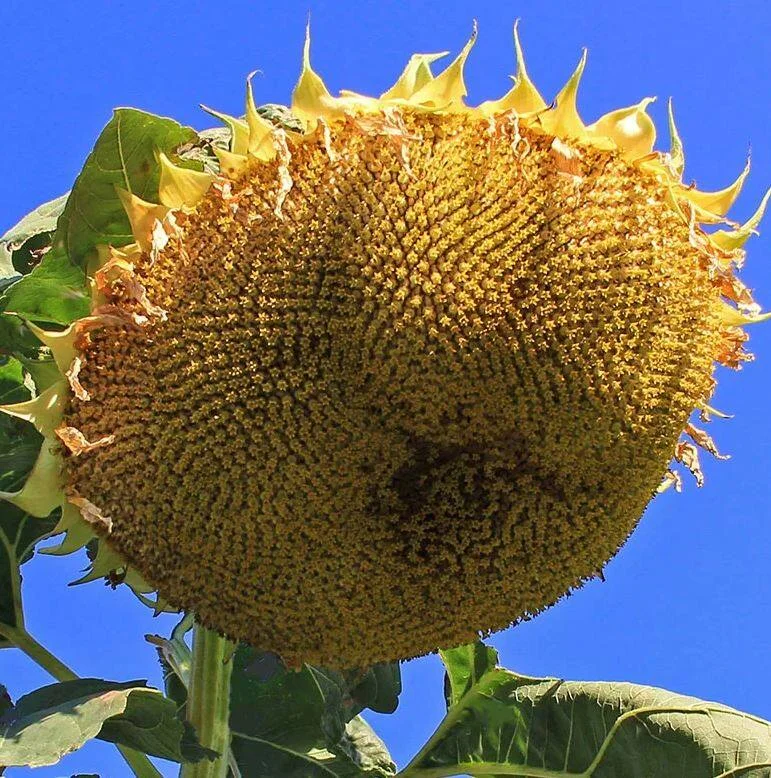

Relative Days: 90 – 100
Color: Orange-Yellow
Height:12 - 14'
Flower: 16 - 18"
Characteristics: One of the tallest sunflowers, with massive blooms. Produces the longest seed great for snacking when roasted. Stake stalks if your area is windy.
Soil
Sunflowers are adapted to a variety of soil conditions, but grow best on well-drained, high water-holding capacity soils with a nearly neutral pH (pH 6.5-7.5). Production performance on high-stress soils, such as those affected by drought potential, salinity or wetness, are not exceptional but compare favorably with other commercial crops commonly grown. Maintaining a moist seedbed is important if producers expect to have uniform germination and emergence across the field. Good soil drainage is required for sunflower production.
Planting
Sunflower may be planted during a wide range of dates. In the northern Great Plains, planting may extend from May 1 until late June. Early maturing hybrids should be selected for late planting or replanting in northern areas. Planting may be as early as two weeks before the last killing frost and as late as 100 days before the first killing frost in the fall.
Harvest
The growing season may vary in length, depending on summer temperatures, relative moisture distribution and fertility levels. The sunflower plant is physiologically mature when the back of the head has turned from green to yellow and the bracts are turning brown, about 30 to 45 days after bloom, and seed moisture is about 35%. Sunflowers are generally mature long before they are dry enough for combining. Often, there are only a few good combining days in October when the seed is dry enough for storage. Seeds should be below 12% moisture for temporary storage and below 10% for long term storage. Seed up to 15% moisture is satisfactory for temporary storage in freezing weather, but spoilage is likely after a few days of warm weather. Harvesting sun- flower at higher moisture contents normally results in higher yields and less field loss. Early harvest also reduces exposure to late-season wet and cold weather. Frequently, mechanical drying is required so harvesting can be completed. Commercially available sunflower headers are useful in decreasing loss of seed as the crop is direct combined. This equipment usually includes 9 to 36 in. width metal pans for catching matured seed and a three-armed or similar reel. A narrower (9 in.) pan width enables harvesting diagonal to the row, which produces fewer harvest losses in some situations.