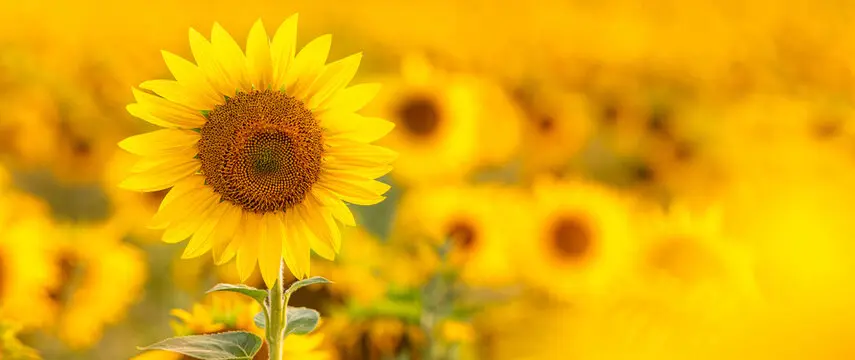
No plant says summer like a sunflower. The bright yellow blooms are like a smile on a stalk. Growing sunflowers is easy because they’re heat tolerant, pest resistant and fast growing. You can use them for cut flowers, leave them on the stalk for a gorgeous outdoor display in your garden, or harvest and eat their seeds. Sunflowers are tall, tough plants, with some varieties reaching 14 feet in height. Some smaller varieties, as short as a foot tall, can fit in pots or small gardens. Many varieties attract bees and birds who dine on sunflower nectar and seeds, making them an ideal choice for a wildlife or pollinator garden. Let's take a look at what's required to grow them.
Choosing the right spot and place
1. Plenty of sunlight - Sunflowers are sun worshipers that grow best in spots that get six to eight hours of direct sun per day.
2. Loose, well-drained alkaline soil (pH 6.0 - 7.5) - They have long tap roots that need to go several feet into the ground.
3. Nutrient-rich soil - They grow healthiest in soil that has compost or other organic matter mixed into it.
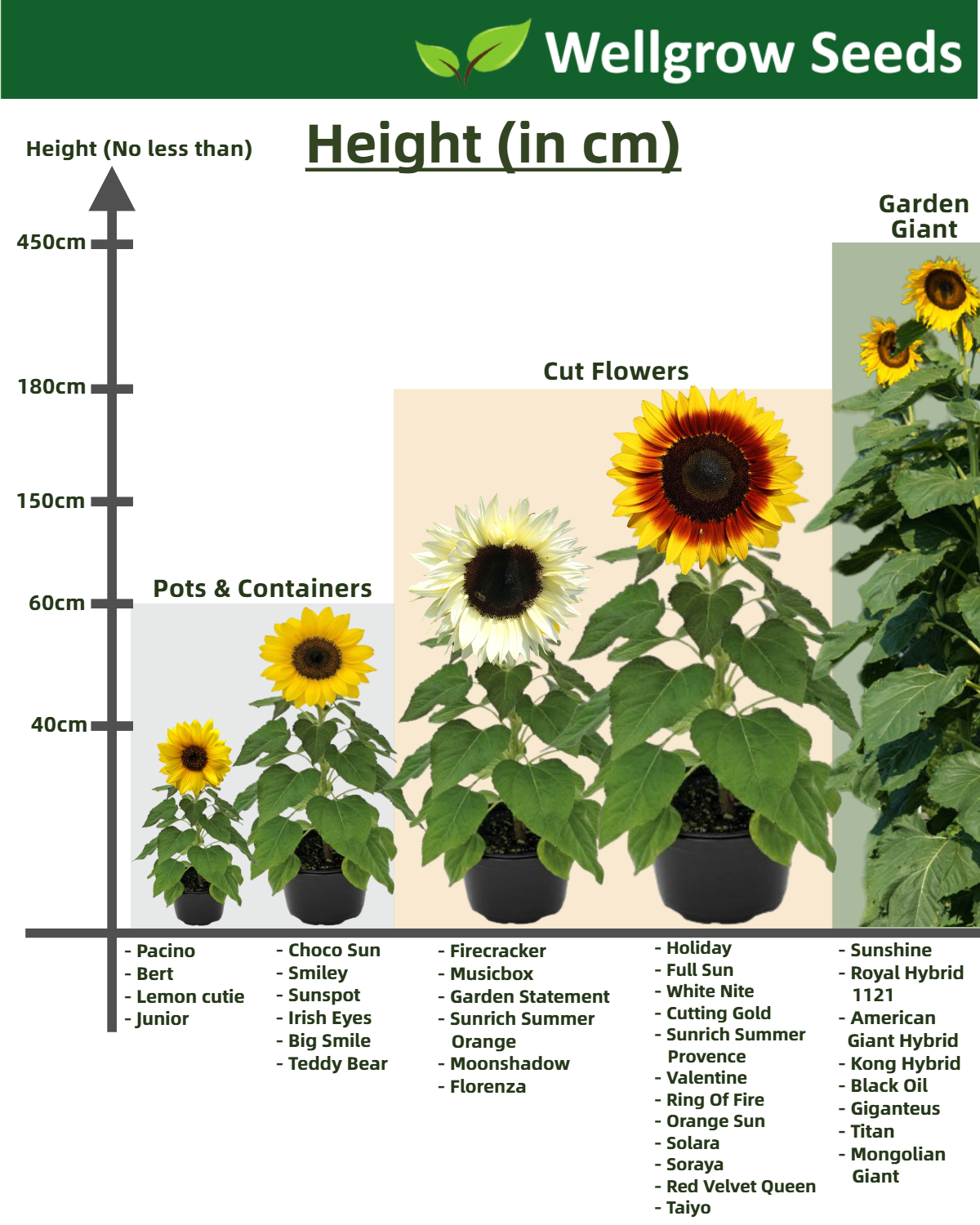
4. Smaller variety for pots - Be sure the pot is deep enough to accommodate their tap root (eg: "Short Stuff" or "Teddy Bear" )
5. Sheltered location for tall varieties - plant them in a sheltered location or along a fence so they’re protected from the wind
How to plant?
- Plant the seeds no more than an inch deep and about 6 inches apart. Thin the seedlings once they hit 6 inches tall, leaving the strongest plants about 12 inches apart.
- For continuous blooms, stagger your planting, sowing a new row of seeds every two to three weeks, beginning in the spring. Succession planting, as this is called, will keep you supplied with continuous blooms until first frost.
- How long does it take for sunflowers to grow? From the time you put the seed in the soil to bloom ranges between 80 and 120 days, depending on the variety.
Caring for Sunflowers
When the plant is small, water the area around the roots, about 4 inches from the plants.
Once the plant is established, water deeply but infrequently to encourage the plant to grow deep roots. Water once a week with several gallons of water per plant, more often if the weather is very dry or very hot.
Tall varieties may need support so they don’t topple under the weight of their blooms. Bamboo or other types of wood stakes work well.
Harvesting sunflower seeds
The brown middle of the sunflower will mature into a seed head after the petals fall off. You can harvest them and eat them (seeds make a nutrient-rich snack). If you’re growing sunflowers to save and eat the seed, do the following:
- Let the flower dry on or off the stem until the back of the head turns brown and the seeds are plump. Once the petals of the sunflower begin to lose their color and the head begins to droop from the weight of the copious seeds, it will take three to four days before the seeds can be easily extracted.
- To keep birds and squirrels from getting the seed, you’ll need to cover the flower heads with garden fleece, cheesecloth or a paper bag after the seed heads mature and the petals fall off the blooms.
- Cut the head off the plant leaving about 6 inches of stem. Place the head in a container to catch loose seeds.
- To remove the seeds, brush your hand over the seed head, knocking out the seeds.
- Once harvested, remove any damaged or discolored seeds. Wash seeds thoroughly and allow to dry before eating.
Check out available varieties from our store!


Axis of Variety vs Height