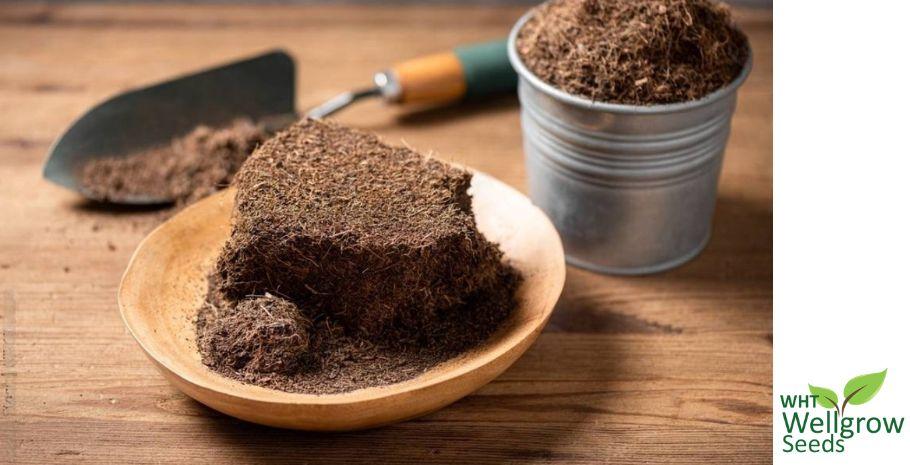
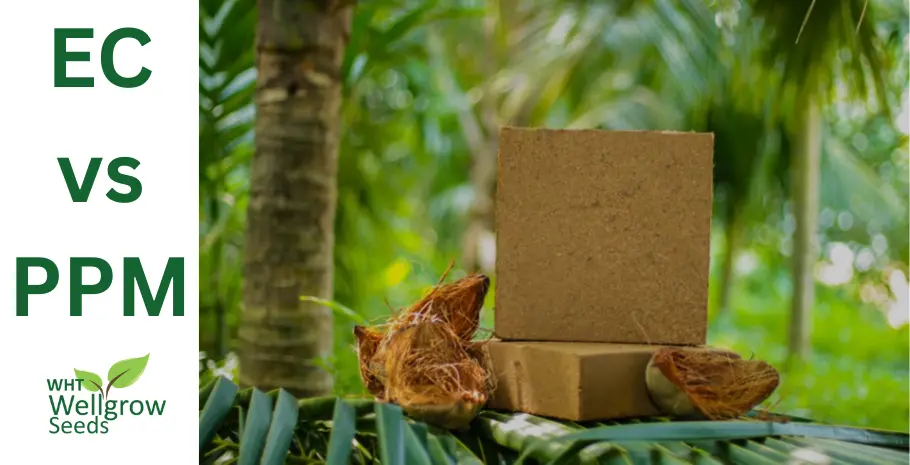
We don’t measure ppm directly for cocopeat blocks because EC (electrical conductivity) is a more practical and standardized way to assess the salt content and overall quality of the cocopeat.
🌱 Here's why EC is used instead of ppm for cocopeat:
| EC (Electrical Conductivity) | PPM (Parts Per Million) |
|---|---|
| Measures how much salt/ion content is in the cocopeat. | Converts EC to an estimated amount of dissolved salts. |
| Directly measurable with EC meters. | Derived from EC — not directly measured. |
| International standard for growing media testing. | Not standardized — different ppm conversion scales exist (e.g., 500, 640, 700). |
| Used to evaluate if cocopeat needs buffering or washing. | Less reliable due to variation in salt types. |
🧪 How it works:
When testing cocopeat, you usually soak it in water (e.g., 1:1.5 or 1:5 extract method) and then:
Use an EC meter to check the salt level.
High EC = high salt content = may harm sensitive plants.
Ideal EC for buffered cocopeat is < 0.5 mS/cm (depending on crop).
💡 Why not ppm?
PPM is not accurate unless you know exactly what salts are present.
EC is universal and consistent, regardless of whether the salt is sodium chloride, potassium nitrate, etc.
Cocopeat can contain a mix of different salts (e.g., Na⁺, Cl⁻, K⁺), so converting EC to ppm using one fixed factor can be misleading.
✅ Summary:
We use EC for cocopeat blocks because it gives a direct, reliable, and standardized way to assess the salt level — while ppm is an indirect, less consistent estimate that depends on what's in the cocopeat.