Using LECA in the Construction Industry: An Overview
Lightweight expanded clay aggregate (LECA) is a construction material that has gained popularity in the building industry due to its unique properties and benefits. Made by heating clay to high temperatures, LECA is distinguished by its lightweight, porous structure and excellent thermal and acoustic insulation properties. This article explores the various applications of LECA in the construction industry, emphasizing its advantages, challenges, and future prospects.
What is LECA?
LECA stands for Lightweight Expanded Clay Aggregate. It is produced by heating natural clay at temperatures exceeding 1,200 degrees Celsius. During this process, the clay expands and forms lightweight, cellular particles. The resulting aggregates are approximately three times lighter than traditional aggregates like gravel or crushed stone, making them a preferred choice in construction applications where weight and insulation are critical factors.
Applications of LECA in Construction
1. Lightweight Concrete: One of the primary uses of LECA is in the formulation of lightweight concrete. By replacing traditional aggregate with LECA, builders can create concrete that has a lower density while maintaining structural integrity. This is particularly useful in high-rise buildings and structures where reducing the overall weight can enhance safety and reduce loading on foundations.
2. Insulation: LECA offers excellent thermal insulation properties, making it ideal for use in walls, roofs, and floors. The porous structure of LECA helps in minimizing heat transfer, which can lead to significant energy savings in heating and cooling buildings. Its use can contribute to achieving energy-efficient certifications and standards.
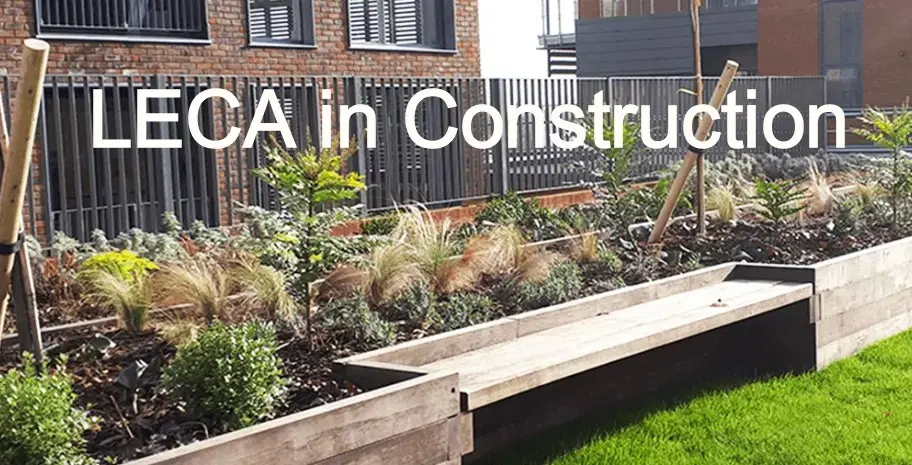
3. Landscaping and Drainage: LECA is also used in landscaping applications such as green roofs and decorative plant beds. Its lightweight nature reduces the load on structures while providing good drainage. LECA enables the cultivation of various plants in roof gardens, allowing for urban greening and improving air quality.
4. Soil Improvement: In geotechnical applications, LECA can be used to improve the load-bearing capacity of weak soils. By mixing LECA with soil, engineers can enhance stability and reduce settlement issues, making it easier to build on challenging terrains.
5. Acoustic Insulation: Due to its porous nature, LECA is effective in sound insulation applications. It can be used in the construction of walls and floors to reduce sound transmission, providing a quieter indoor environment.
Advantages of LECA
- Lightweight: The reduced weight of LECA makes it easier to transport, handle, and work with on construction sites, which can lead to cost savings in labor and logistics.
- Durability: LECA is resistant to rot, pests, and moisture, making it a durable choice for various applications in construction.
- Eco-Friendly: LECA production typically has a lower carbon footprint compared to traditional construction materials. Additionally, it can be made from abundant natural resources, contributing to sustainable construction practices.
- Thermal and Acoustic Insulation: The excellent insulation properties of LECA can lead to lower energy costs and enhanced comfort levels in buildings.
Other LECA concrete properties worth mentioning:
- high fire resistance,
- relatively low water absorption,
- high resistance to pressing,
- frost resistance,
- good sound absorption,
- easy mechanical treatment (e.g. cutting to length),
- capacity to accumulate heat,
- low thermal transmittance.
Future Prospects
As the construction industry increasingly focuses on sustainability and energy efficiency, the demand for materials like LECA is expected to grow. Innovations in LECA production and application, such as combining it with other sustainable materials, will likely enhance its attractiveness to architects, engineers, and builders alike.
In conclusion, LECA presents a versatile and valuable option for various applications within the construction industry. Its lightweight nature, insulation properties, and eco-friendly benefits make it a favorable choice for modern building techniques, aligning with global trends toward sustainable construction practices. As the industry continues to evolve, LECA represents a promising material that can contribute to innovative and sustainable building solutions.
Are you looking for bulk quantities of LECA? Contact us today!