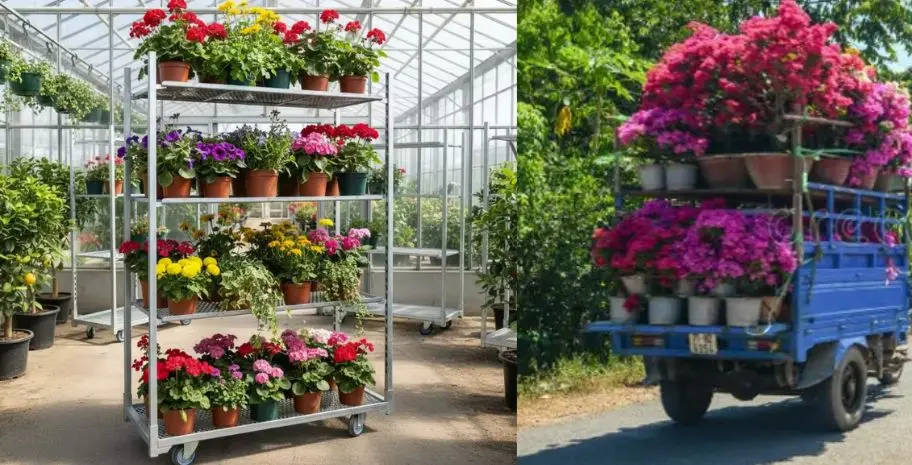
Having trouble sending grown zinnia flowers in pots? Read more
WHAT HAPPENED
It is likely that your zinnia plants are not "ill" in the traditional sense (like a virus or fungus), but are suffering from Transplant Shock and Thermal Stress.
Zinnias are sensitive to sudden environmental shifts.1 Moving them from a stable 24°C to a 30°C environment—especially during a 4-5 hour transit—creates a "perfect storm" of physiological stress.
Why the Plants "Contracted Illness"
The symptoms you see (drooping, wilting, or yellowing) are the plant’s immediate reaction to the following factors:
Sudden Transpiration Spike: At 30°C , the rate of evaporation from the leaves (transpiration) increases significantly compared to 24°C . If the roots were disturbed or the air in the transport vehicle was dry, the plant cannot pull up water fast enough to replace what it is losing, causing it to go limp.
Ethylene Buildup: During transportation, plants are often in enclosed spaces with limited airflow. This causes a buildup of ethylene gas, a natural plant hormone that, in high concentrations, causes leaves to yellow, droop (epinasty), or drop off entirely.
Vascular Blockage: During transit, the movement and vibration can cause small air bubbles to form in the plant's water-transporting tubes (xylem). Combined with the 6°C temperature jump, this "air embolism" prevents water from reaching the upper leaves.
SOLUTIONS
Moving zinnias from 24°C to 30°C is a 6°C jump that essentially forces the plant into "overdrive." To prevent them from contracting environmental illness or severe shock during a 4–5 hour journey, you need to manage their water loss and internal temperature before they ever leave the door.
1. The "Deep Hydration" Strategy (24 Hours Before)
The most common cause of "illness" after transport is dehydration.
- Water Early: Give the plants a deep soak 24 hours before moving. Do not water them immediately before loading; soggy soil in a dark, warm car can lead to root rot or "damping off."
- Hydrate the Foliage: Since zinnias are prone to fungal diseases like Powdery Mildew, do not wet the leaves.1 Instead, ensure the soil is fully saturated so the plant’s internal "plumbing" (turgor pressure) is at its maximum strength.
2. Physical Preparation
Anti-Transpirant Spray: Consider using a "waxy" anti-transpirant spray (available at garden centers). This creates a temporary thin film on the leaves that prevents water from evaporating too quickly during the 30°C heat.
Pruning: If the zinnias are very leggy or have many large, older leaves, prune them back by about 10–20%. Fewer leaves mean less surface area for the plant to lose water.
Check for Pests: Stress makes plants a magnet for pests. Inspect for spider mites or aphids before packing; if you transport one infested plant, the heat will cause the pest population to explode during the 5-hour trip.
3. Creating a "Cool Microclimate" for the Trip
The 4–5 hour transit is the danger zone.
The "Double Box" Method: Place the pots in a sturdy cardboard box, then place that box inside a slightly larger one with crumpled newspaper in between. This provides thermal insulation against the rising outside temperature.
Ventilation is Vital: Never seal the box completely.2 Cut 2-inch "breathing holes" in the sides to prevent ethylene gas buildup, which causes the leaves to yellow and drop.
White Wrapping: Wrap the pots in white paper or aluminum foil. Dark plastic pots absorb heat rapidly; white reflects it, keeping the roots at a stable 24°C for longer.
4. Post-Arrival "Quarantine"
Don't Rush the Sun: When you arrive at the 30°C destination, your instinct will be to put them in the sun. Don't.
Keep them in a bright but shaded area (like a porch) for at least 48 hours. This allows the plant to adjust its internal chemistry to the higher temperature without the added stress of photosynthesis.