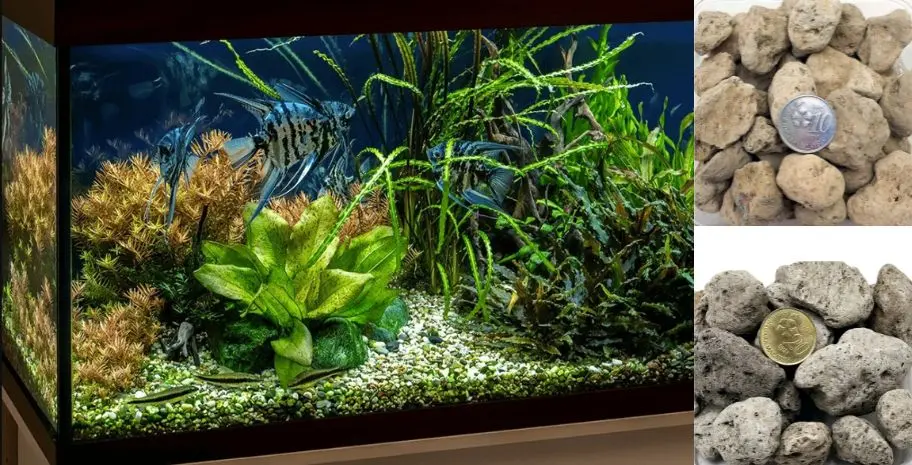
Pumice can be used as an aquarium filter medium, and it’s actually quite good for biological filtration 👍
Why pumice works well
- Highly porous → huge surface area for beneficial bacteria
- Lightweight but still sinks once waterlogged
- Inert (usually doesn’t change pH or water chemistry)
These properties make pumice similar to commercial bio-media like ceramic rings or lava rock.
Best uses in an aquarium
- Biological filtration (nitrifying bacteria)
- Can replace or supplement:
- Ceramic rings
- Bio balls
- Lava rock
Place it in:
- Canister filter media baskets
- Hang-on-back (HOB) filter media bags
- Sump filter chambers
What to watch out for
- Rinse very well
Pumice produces fine dust that can cloud water or damage pumps. - Use the right size
- Too small → may restrict water flow
- Best size: ~1–3 cm pieces in a mesh bag
- Quality matters
- Use natural pumice, not treated or dyed landscaping pumice
- Avoid pumice mixed with fertilizers or chemicals
- Not mechanical filtration
- It does not trap fine debris well
- Pair it with sponge or filter floss
Freshwater vs saltwater
- Freshwater: Excellent choice
- Saltwater / reef: Generally safe, but rinse extra thoroughly and monitor parameters initially
✅ Recommended pumice sizes
Best overall: 10–30 mm (1–3 cm)
This size range gives:
- Excellent surface area for beneficial bacteria
- Good water flow (won’t clog easily)
- Easy containment in a mesh filter bag
Size guide by function
- 5–10 mm (0.5–1 cm)
✔ High surface area
❌ Can clog quickly
❌ May escape media baskets
➜ Use only if packed loosely in fine mesh - 10–20 mm (1–2 cm) ⭐ Ideal
✔ Best balance of flow and surface area
✔ Very stable biologically
✔ Low maintenance - 20–30 mm (2–3 cm)
✔ Excellent flow
✔ Very low clogging
❌ Slightly less surface area
➜ Good for high-flow canister or sump filters - >30 mm (3+ cm)
❌ Wastes space
❌ Reduced effective filtration
➜ Not recommended